
Building Your Style Story
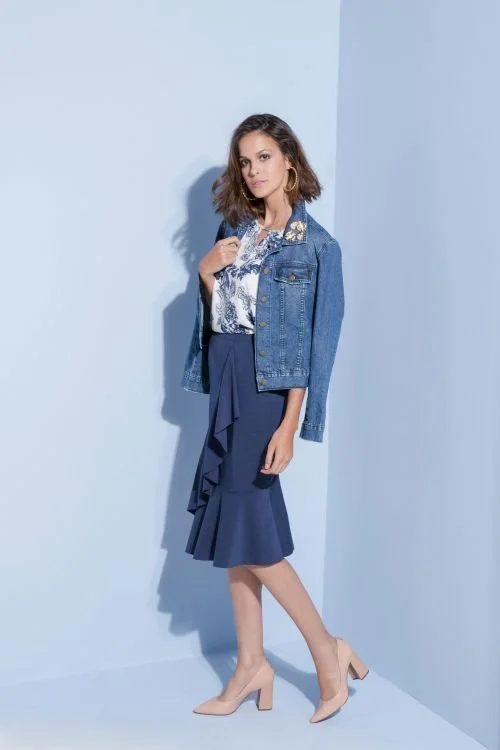
A style story is who you are in every moment. For our model, that shows up through layering, versatility, and a mix of classic and soft.
Most of us were taught to think about clothes as individual purchases or one-time outfits. A top. A dress. A jacket. Something that works for one outfit, great. You move on, not thinking about the longevity of the piece or how you can re-wear it again and again.
But buying clothes this way almost always leads to a full closet and not much continuity. A series of clothes bought for different seasons of your life and different versions of yourself.
Whether we realize it or not, we are building a style story.
Part of why I was drawn to launch The Thrifted Capsule is because, let’s face it, my closet was a mess. And while I loved thrifting and the sustainability model of less waste, I was facing a real clothes crisis. I had nothing to wear that I truly enjoyed or felt committed to, and it was hard to get dressed.
Over time, I began to understand that I describe my style as a trendy classic. I love classic lines, but I also like to mix in a few avant-garde, playful pieces. At first, I did not realize that. I was simply grabbing what felt cute in the moment.
Then I started noticing other people who do it really well.
I would think, she always looks good. And then I would start to see patterns. Certain silhouettes. Certain colors. Certain types of pieces showing up again and again. Whether I realized it or not, they were not just getting dressed. They were telling a story about who they are.
That was the shift for me. It was about a style story – not just clothes.
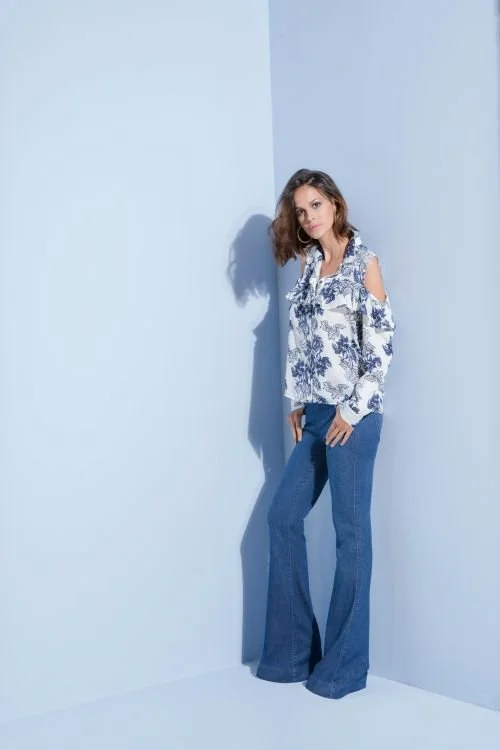
An example of a repeatable style silhouette: soft blouse + classic denim.
Here are five ways to start understanding your style story.
1. Identify your core silhouettes.
Look across your closet and name the shapes you consistently own and wear. For example: oversized blazers, straight-leg pants, midi dresses, cropped jackets, button-down shirts. Most people only truly live in three to five silhouettes, even if they own many variations. Your silhouettes are the skeleton of your style story.
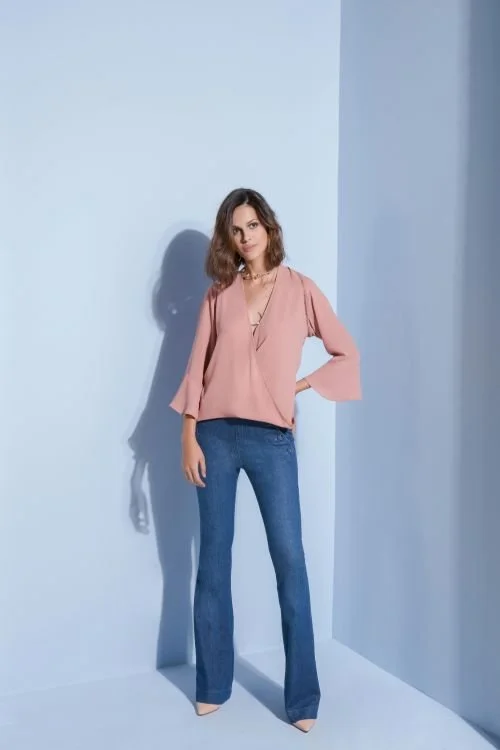
Same story, new chapter. Soft neutrals, feminine lines, and a trusted denim shape.
2. Define your color comfort zone.
Pull the colors you wear most often. Not the ones you admire, but the ones you actually put on. Are they mostly neutrals? Earth tones? Black and white? Soft pastels? Deep jewel tones? Your palette becomes the emotional tone of your story.
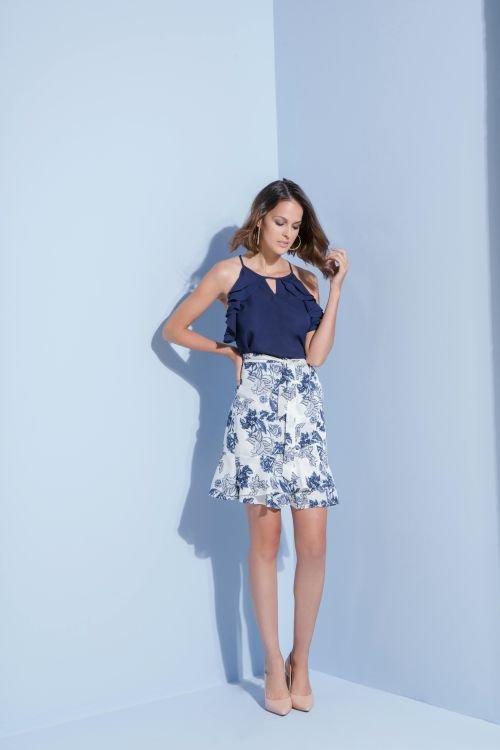
Her palette stays consistent while the expression changes.
3. Clarify your texture preferences.
Notice the fabrics you gravitate toward: denim, wool, silk, linen, cotton, leather, knits. Texture influences how a look feels as much as silhouette does. Someone drawn to crisp cotton and wool tells a different story than someone drawn to drapey silk and soft knits.
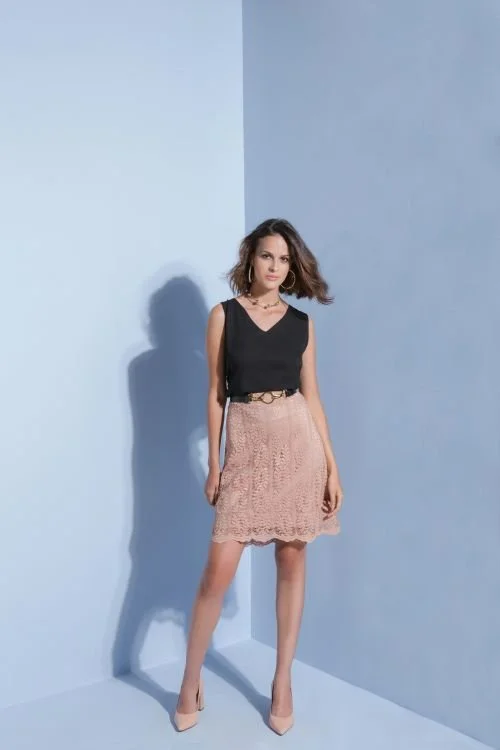
This look shows how classic structure and soft texture work together as part of her signature.
4. Name your structure level.
Ask yourself where you land on the spectrum between structured and relaxed. Do you feel best in tailored pieces, or in loose, flowing shapes? Many people lean strongly one way, or live somewhere in the middle. This dramatically narrows what works for you.
5. Identify your style tension.
Most compelling personal styles contain contrast. Maybe you like classic with a hint of edge. Minimal with one bold piece. Soft with something structured. That tension becomes part of your signature.
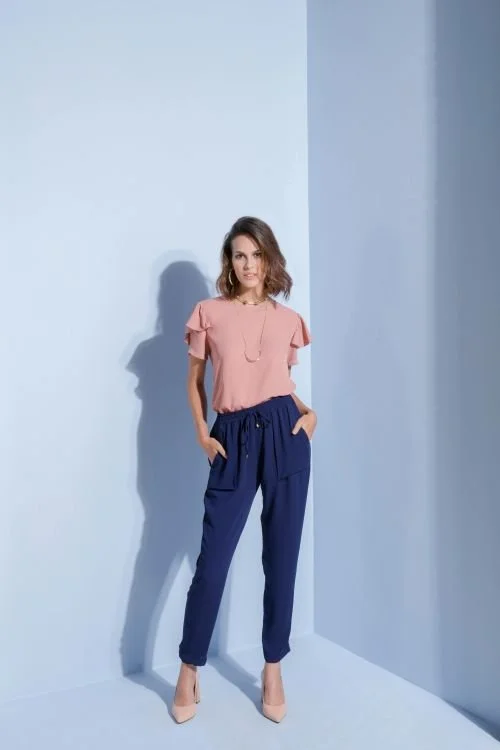
A soft, feminine blouse. Relaxed, grounded trousers. A classic heel to finish. The contrast is part of what defines her style story.
From there, patterns begin to surface. Your style story is not something you invent from scratch. It is something you articulate.
Once you begin to understand your core silhouettes, color comfort zone, texture preferences, structure level, and style tension, you can start building a capsule collection with intention.
1. Choose your anchor category.
Every capsule needs a few anchor categories that carry the most weight in your wardrobe. These are the categories you wear most often and feel best in. For some people, it is blazers and trousers. For others, it might be dresses and boots. Your anchor categories should directly reflect your core silhouettes.
Start by selecting two to three anchor categories. These will become the foundation of your capsule.
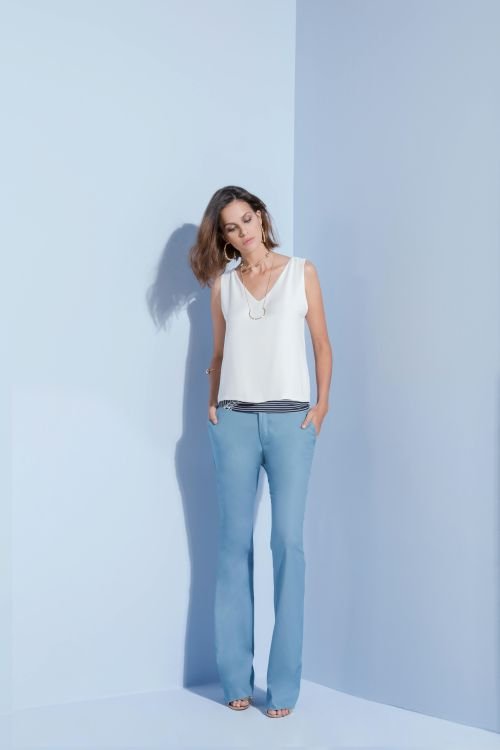
Anchor pieces at work. Clean top. Tailored pant. A formula she can return to.
2. Build multiples within your anchors.
A capsule is not about owning one perfect blazer or one perfect pair of pants. It is about owning a small range of versions within your anchor categories.
If blazers are an anchor, that might mean owning two to four blazers that vary slightly in color, fabric, or cut, but still fit your overall style story. This allows repetition without feeling repetitive.
3. Stay inside your color story.
Use your color comfort zone as a filter. When considering a piece, ask whether it integrates into your existing palette. This is how outfits begin to form naturally, without overthinking.
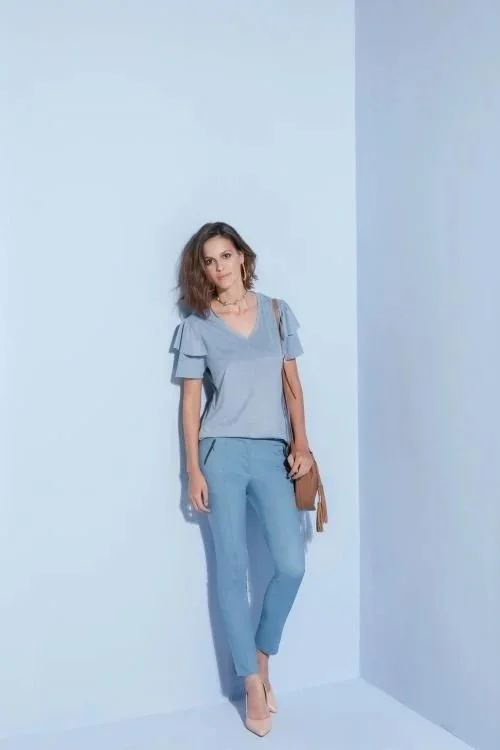
Her palette stays consistent, even when silhouettes shift. That cohesion is what makes outfits feel effortless.
This does not mean everything must match. It means your pieces should speak the same visual language.
4. Choose pieces that support multiple outfits.
Before adding something to your capsule, consider at least three ways you would wear it with items you already own. If you cannot immediately see those combinations, the piece may be beautiful, but it is likely not foundational.
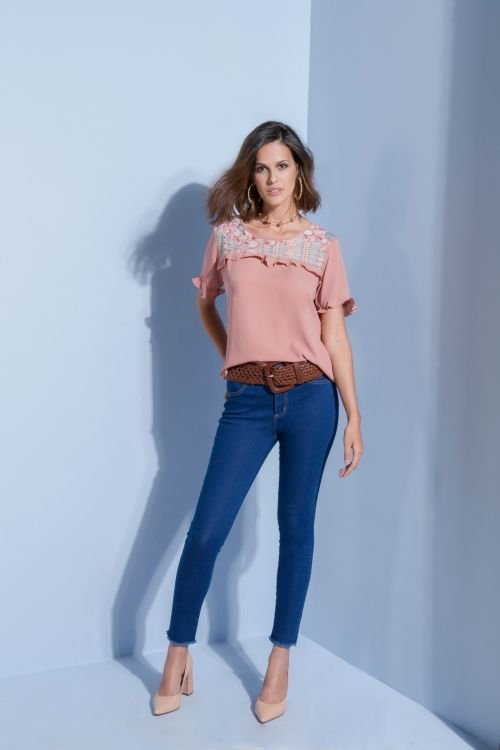
A foundational top paired with trusted denim. Easy to imagine this blouse styled at least three different ways.
This single practice dramatically improves wardrobe cohesion.
5. Prioritize versatility over novelty.
Novelty is fun, but novelty-heavy wardrobes are harder to sustain. Capsule collections rely on pieces that can shift between casual and elevated, layered and standalone, work and weekend.
Versatile pieces create range. Range creates longevity.
6. Let your capsule grow slowly.
Capsules are built through layering, not through one big overhaul. Each addition should feel like a natural extension of what is already working.
This prevents impulse buying and keeps your style story coherent.
A capsule collection built this way becomes a living system. Pieces relate to each other. Outfits build themselves. Getting dressed becomes easier. You can see that living system reflected in the model’s looks, where familiar silhouettes, a consistent palette, and soft-meets-classic contrasts show up again and again in new ways.
This is also how I approach curation at The Thrifted Capsule. I look for pieces that can function as anchors, integrate into multiple style stories, and live many lives in a wardrobe. The goal is not to give you a finished look. The goal is to give you building blocks.
What’s your style story?